Simpson 260 Series 8
Overview
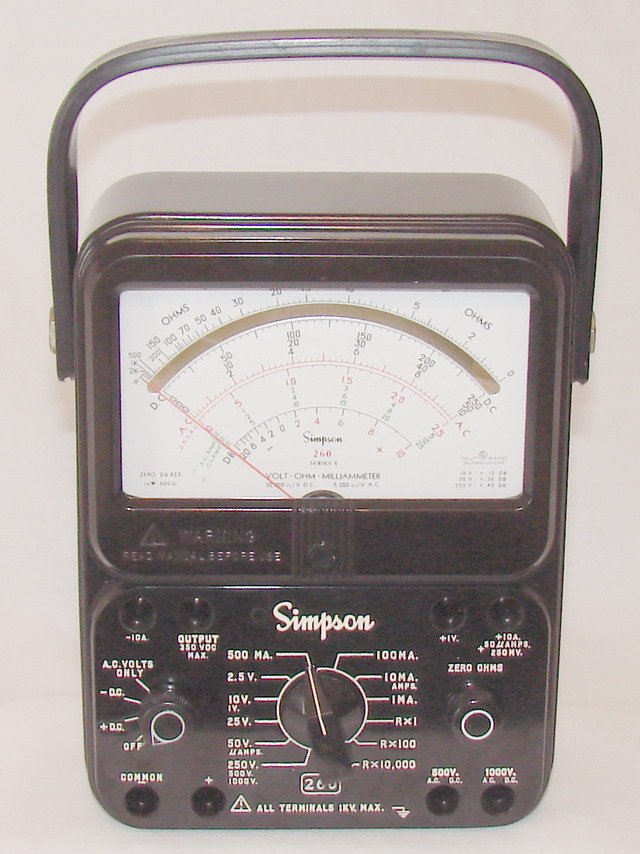
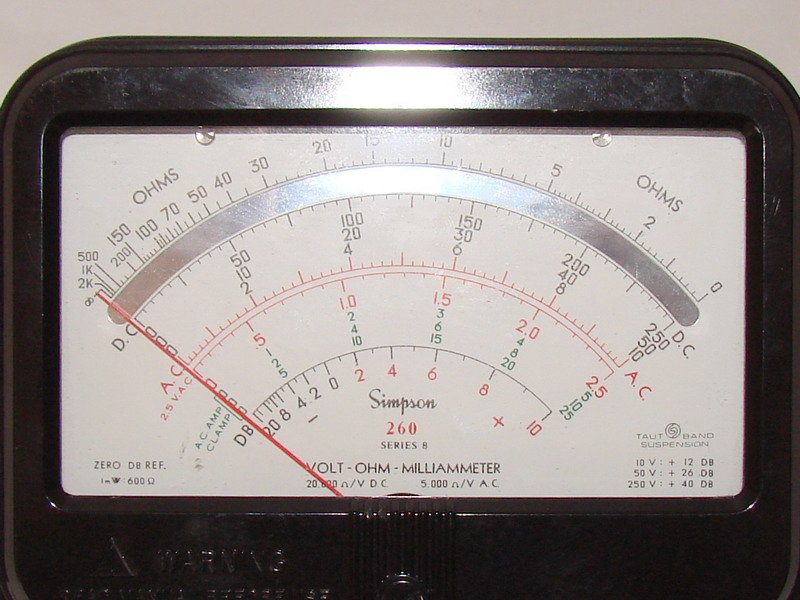
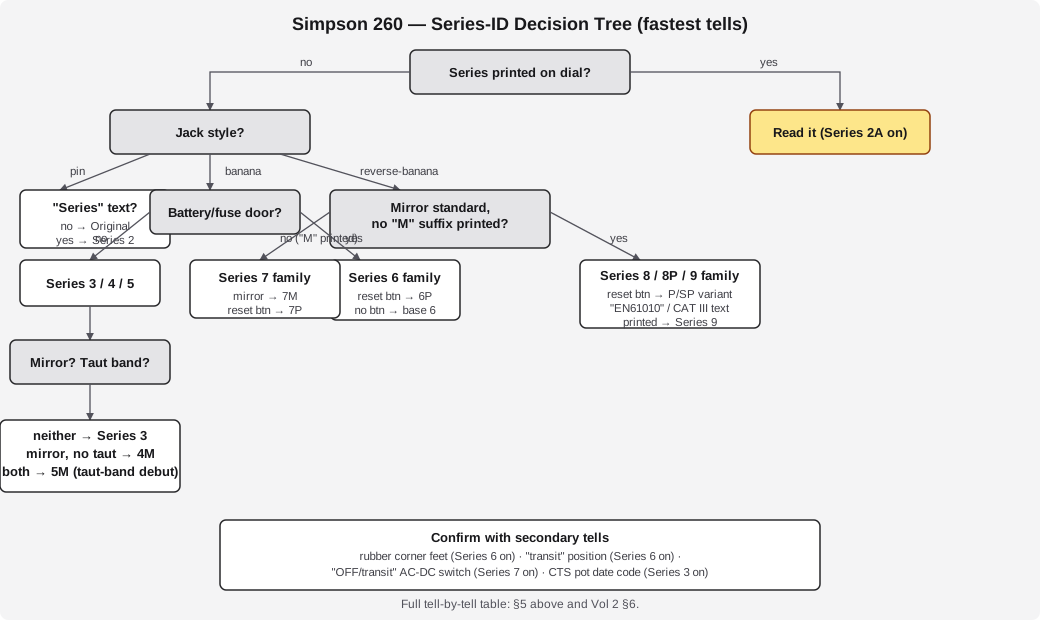
The Simpson 260 is the iconic American analog VOM — patented 1936, first shipped ~1939, and still in production today (2026: the current 260-8 / 260-8P / 260-9SP). The Series 8 is a late-production revision with a rotary range switch (a large selector knob — not a "lever"), the mirrored dial standard (which is why Series 8 drops the "M" suffix), and a taut-band movement (taut band has been standard since Series 6, ~1973 — it did not originate on Series 8). 20 kΩ/V on DC, 5 kΩ/V on AC, 50 µA movement. For tube-circuit work it's loadable on high-Z nodes (reach for the B&K 375 or Simpson 311-2 VTVM on grid / screen / AVC measurements) but on power-supply rails and filament circuits the 260 is the right tool — fast, no warm-up, no batteries needed for the voltage/current ranges (batteries serve the ohms ranges only).
Context
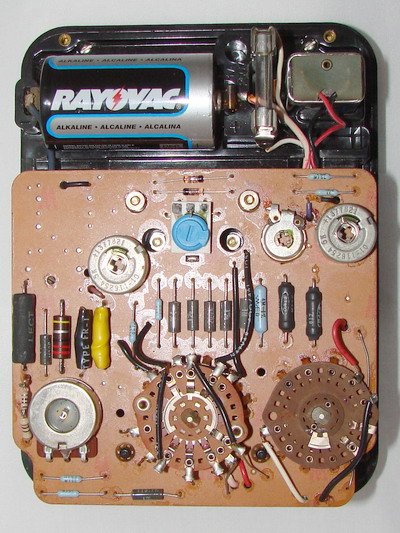
Generations of technicians were trained on the Simpson 260 — Simpson's own history confirms wide WWII-era military use (the specific "official US Navy standard" / "Bell System standard" claims repeated online are not primary-sourced, so don't assert them as fact). Knowing how to read it — the mirror scale, the cascaded scales, the reciprocal-ohms scale — is part of the basic literacy of vintage electronics work. The current 260-8 and the earlier Series 6–8 are the versions most likely to be serviceable today (parts availability for the earliest movements is thinner). Common service issues: the rotary range-selector wafer contacts oxidize; the 1.5 V D-cell battery holder / spring-clip contacts corrode from a leaked cell (Jeff's 6P needed exactly this); the AC rectifier (copper-oxide on the earliest series → germanium 1N87-class later) ages, giving the classic "AC reads low" symptom.