B&K Dynamic 375 VTVM
Overview
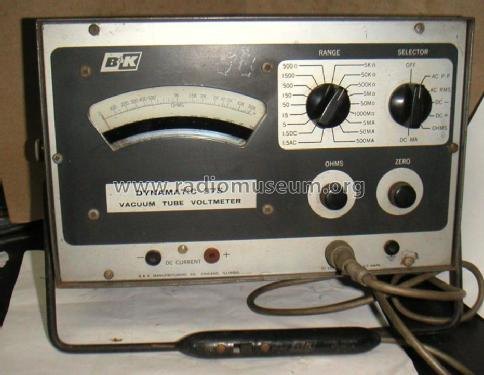
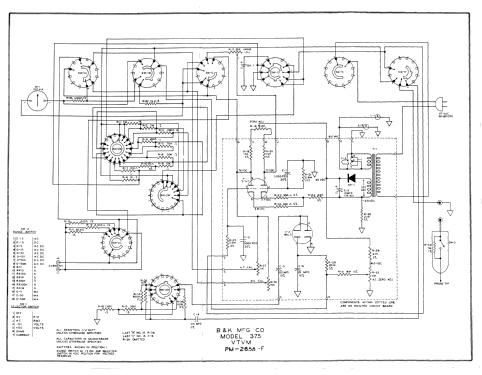
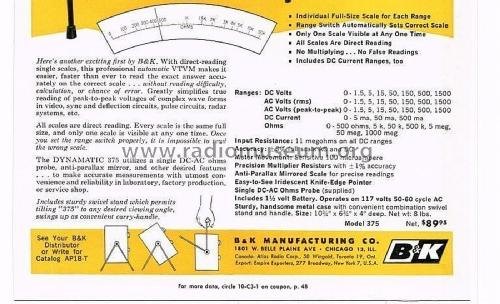
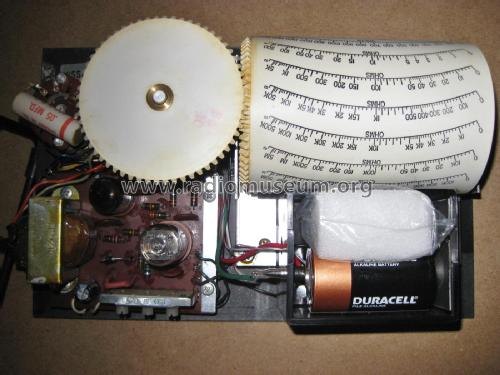
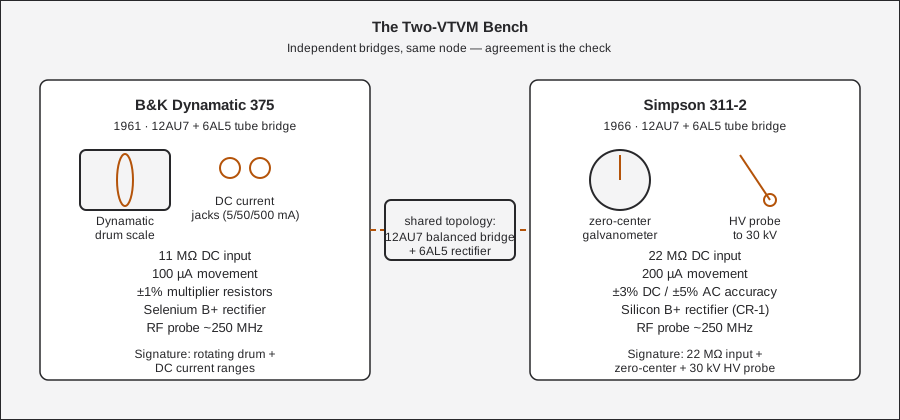
B&K's Model 375 — correctly the "Dynamatic 375" (the folder name says "Dynamic"; that's a scaffold typo) — is a 1961 vacuum-tube VTVM. "DYNAMATIC" is B&K's name for its signature feature: a rotating illuminated drum scale (one full-size direct-reading scale per range in a lighted window — no multiplying). It provides the 11 MΩ DC input impedance that tube-circuit work demands (grid-bias, AVC, screen-supply nodes that a 20 kΩ/V VOM would crush), with the 1.5 / 5 / 15 / 50 / 150 / 500 / 1500 V DCV and ACV (RMS and peak-to-peak) cascades, plus — unusually for a VTVM — DC-current ranges (5/50/500 mA). Ohms uses an internal 1.5 V D cell. RF demodulator probe to ~250 MHz. Counterpart to the Simpson 311-2 VTVM on Jeff's two-VTVM cross-check bench.
Context
VTVMs (Vacuum Tube VoltMeters — even the late solid-state ones kept the name) are the standard high-Z voltmeter for tube-era service work. The 375 is the workhorse counterpart to the Simpson 311-2 VTVM. Where the Simpson 260 VOM (20 kΩ/V) is loadable, the 375's 10 MΩ input keeps grid and screen-supply measurements honest. This unit also has an RF probe input for measuring up to 250 MHz — useful for IF alignment in tube-era radio receivers.