eTracer
Overview
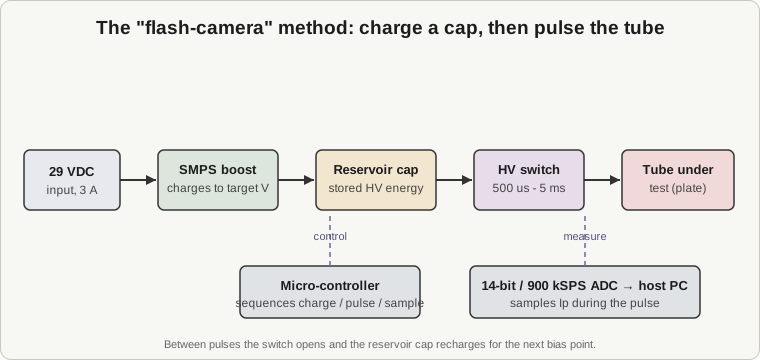
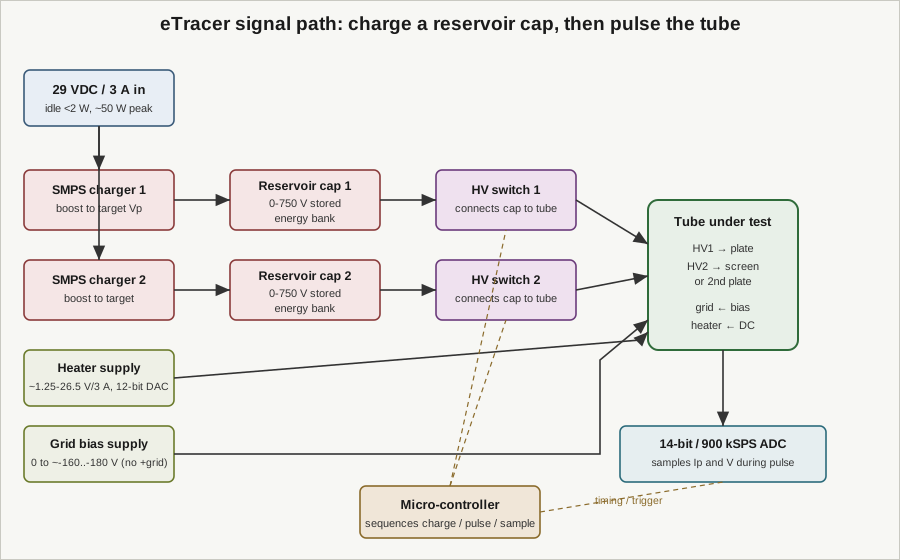
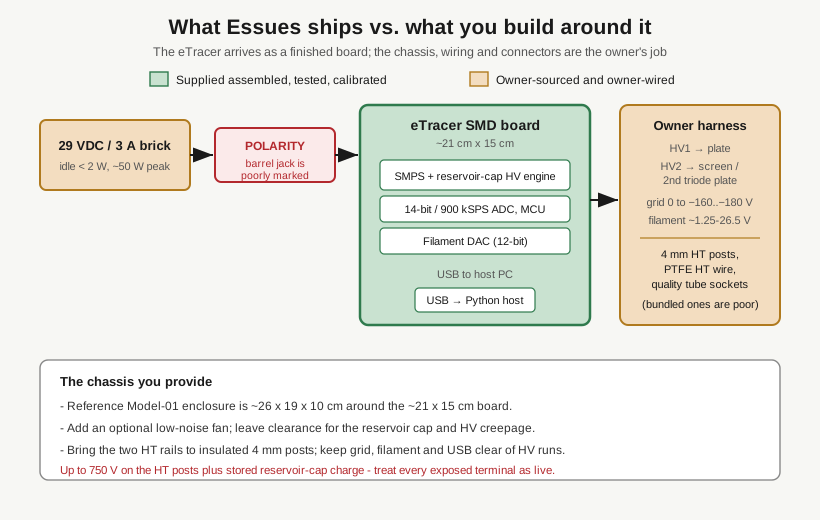
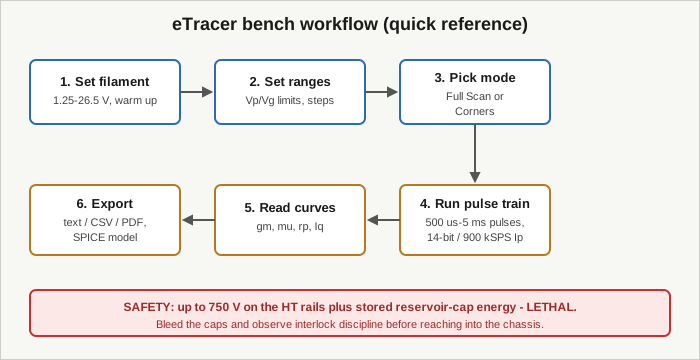
The eTracer is a PC-controlled, pulsed-HV vacuum-tube curve tracer / tube tester designed and sold by Chris Chang of Essues Co., Ltd. (Taiwan), introduced late 2017. Like Dekker's uTracer it uses the "flash-camera" trick — rather than supplying continuous DC to the tube (which forces a bulky, expensive HV supply and limits the envelope to the tube's continuous dissipation), an SMPS charges a reservoir capacitor to the target voltage, then switches it onto the tube for a brief pulse (500 µs – 5 ms) while sampling plate current with a 14-bit / 900 kSPS ADC — letting it characterize tubes well above their continuous dissipation rating without damage. Two independent HV rails (0–750 V @ 300 mA each) feed plate and screen (or both plates of a twin-triode "in one shot"). Delivered as a fully assembled, tested, calibrated SMD board (not a solder-kit, not a publish-the-files DIY project); the Python host software runs on Windows (and under Wine on Linux) and exports text/CSV/PDF plus SPICE models (Reefman ExtractModel-compatible).
Context
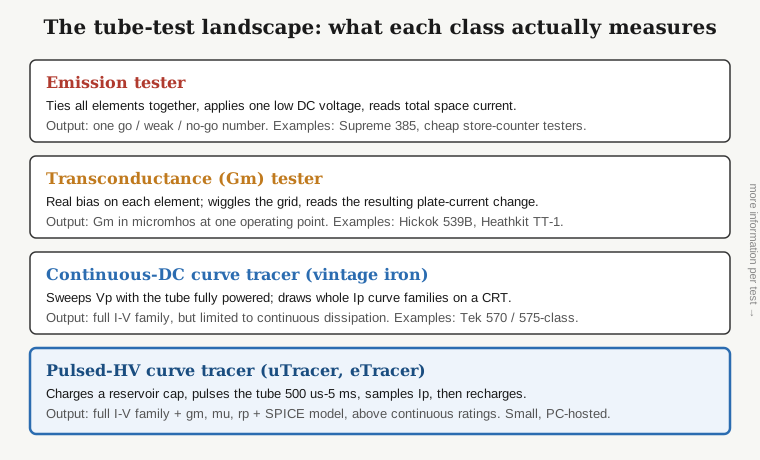
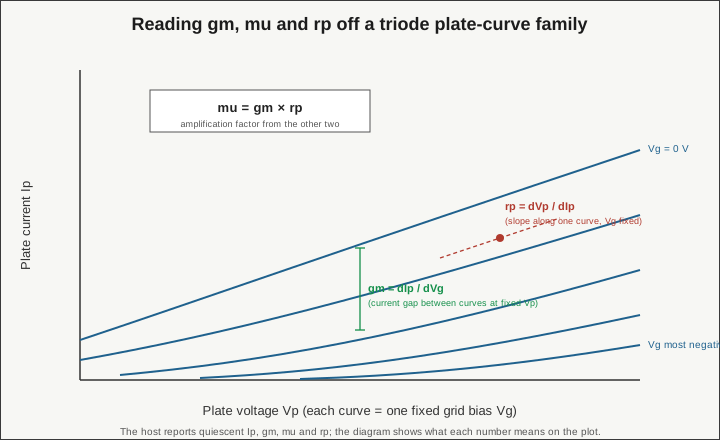
Pulsed-HV curve tracers are the defining modern tools for characterizing NOS and pulled tubes — plotting full plate-current families and extracting gm, µ, and rp instead of a single go/no-go number. The eTracer (Essues) and the uTracer6 (Dekker) are the two rival pulsed-HV tube curve tracers on Jeff's bench — a Taiwanese commercial assembled unit and a Dutch DIY kit that arrived at the same "charge a cap, pulse the tube" idea independently. Both are paired with the Heathkit TT-1 (transconductance go/no-go) and the Supreme Instruments 385 (emission tester) — together covering the spectrum from quick triage to publishable curves + SPICE models. The eTracer's edge over the uTracer of its day was a higher envelope (750 V / 300 mA) and a 14-bit / 900 kSPS ADC; its limits are no positive-grid drive, thin documentation, and basic host-side graphics.