uTracer6
Overview
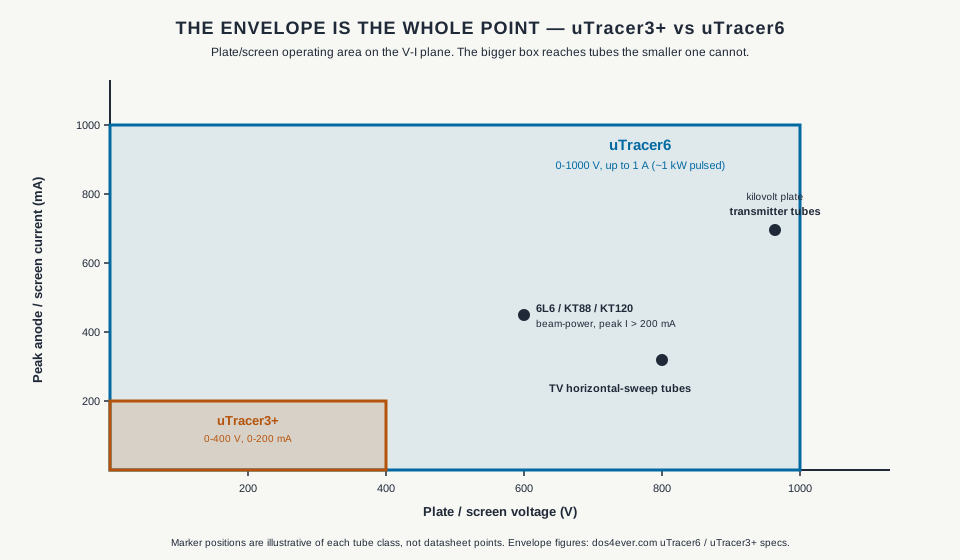
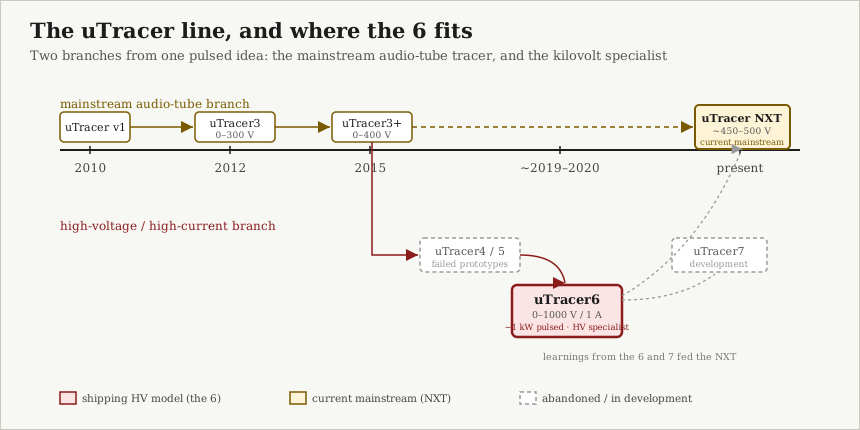
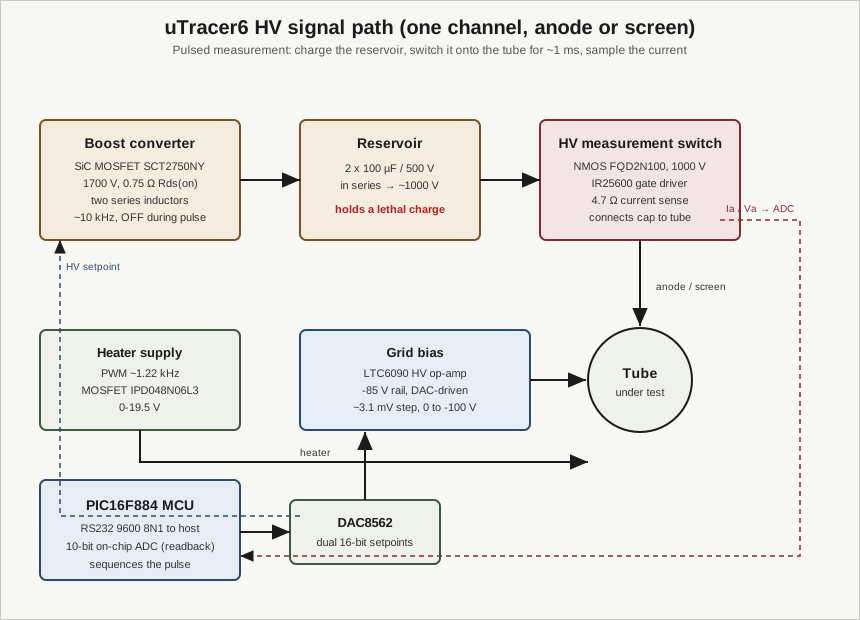
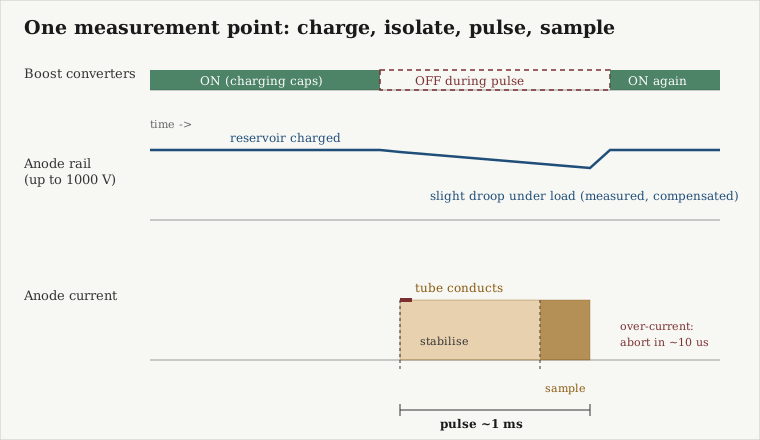
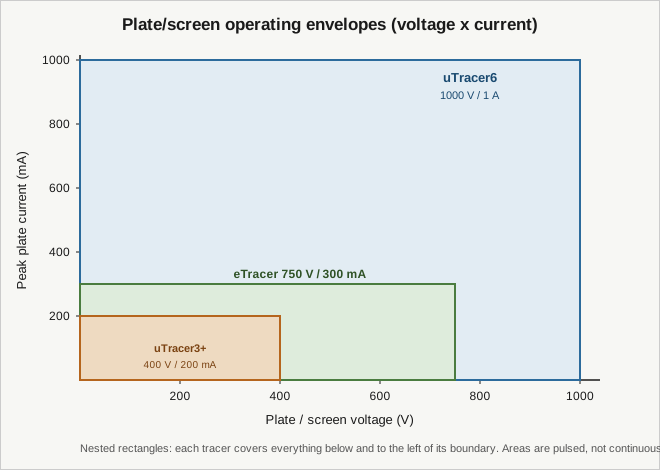
The uTracer6 is Ronald Dekker's kilovolt-class DIY tube curve tracer (dos4ever.com) — a distinct high-voltage model in the uTracer line, not a revision of the uTracer3 and not the line's current mainstream (that is the uTracer NXT; the 6 sells in parallel as the high-voltage/high-current specialist "for experienced users"). The defining technique is the shared uTracer one: instead of continuous DC at the plate (which forces a massive supply and limits the envelope to the tube's continuous dissipation), small boost converters charge reservoir capacitors to the target HV, then switch that onto the tube for a ~1 ms pulse while sampling Ip — sweeping the full transfer characteristic well above continuous Pa max without damage. Its envelope is 0–1000 V and up to 1 A on both anode and screen (~1 kW peak pulsed power), grid 0 to −100 V (0 to +100 V and grid-current measurement with the optional extension board) — reaching sweep/beam-power and transmitter tubes the 400 V / 200 mA uTracer3+ cannot. Sold as a through-hole kit (€329, +€80 for the positive-grid extension); SiC boost switch (SCT2750NY), 1000 V HV-switch NMOS, PIC16F884, DAC-driven grid via an LTC6090. Windows (Visual Basic) host software; data saves to .utd (delimited-text export available) and plots to .bmp.
Context
Paired on the bench with the rival eTracer (Essues' Taiwanese commercial tracer — the two arrived at the same charge-a-cap-and-pulse idea independently), the uTracer6 is the deep-characterization side of the tube-test workflow — Heathkit TT-1 (Gm go/no-go) and Supreme 385 (emission go/no-go) handle quick triage; the curve tracers produce the data that goes into published SPICE models or matched-pair selection for audio amplifier output stages. The uTracer6's real advantage is its kilovolt envelope: its 1000 V / 1 A ceiling reaches sweep-tubes (beam-power 6L6 / KT88 / KT120 family), TV horizontal-sweep tubes, and transmitter tubes that the 400 V / 200 mA uTracer3+ (and the eTracer's 750 V / 300 mA) cannot fully exercise — at the cost of being more oscillation-prone, which is why Dekker markets it to experienced builders.