Curve Tracers — Overview & Primer
Overview
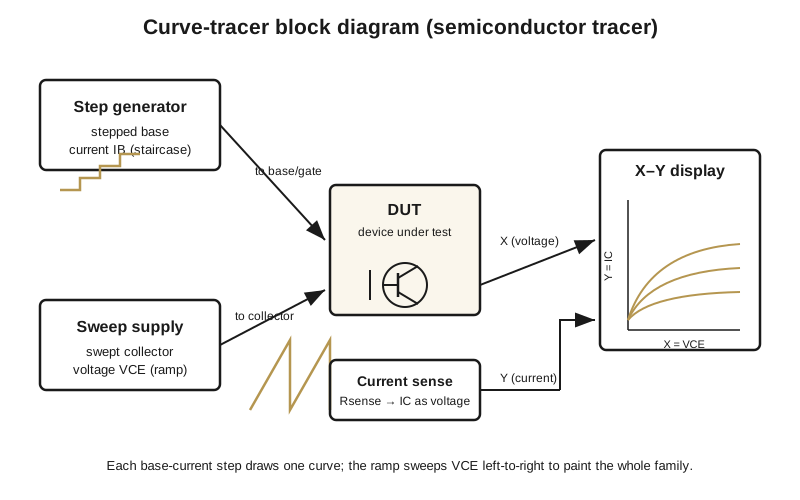
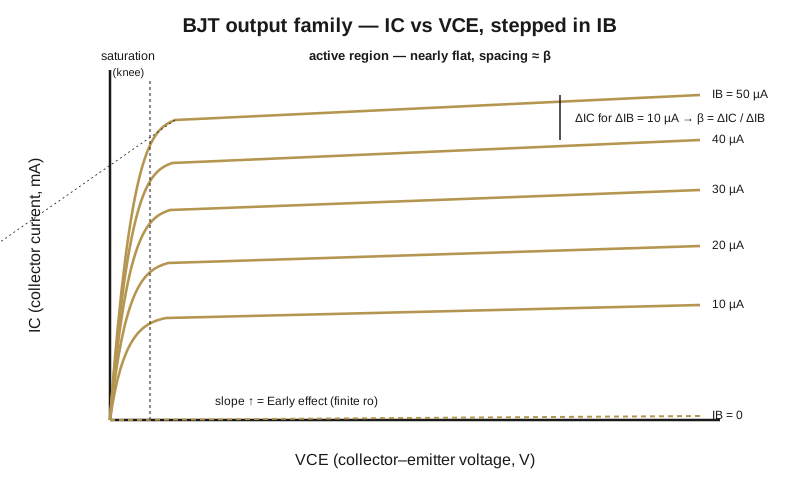
A curve tracer is a test instrument that sweeps voltage across a device under test while measuring the resulting current, then plots the current-vs-voltage (I-V) characteristic curve directly — turning an active device's behavior into a picture you can read at a glance. This is the umbrella overview & primer dive for the Curve Tracers category: what a curve tracer is, the difference between semiconductor curve tracers (transistors, diodes, FETs — the Tektronix 575/576/577 lineage) and tube curve tracers (the uTracer / eTracer pulsed-HV designs), how the I-V curves are generated, how to read a family of curves (β, gm, breakdown, saturation, matching), and how to choose between buying vintage iron and building a modern DIY tracer. It is the on-ramp that ties together the specific tracer dives in this category.
Context
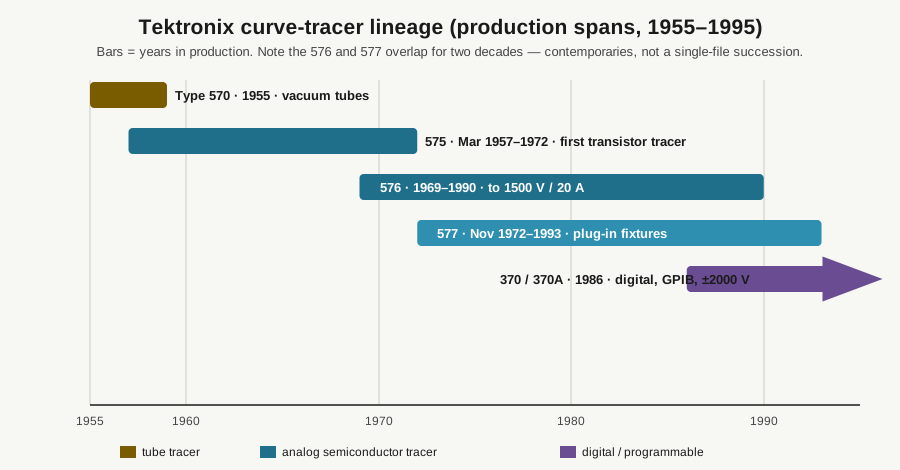
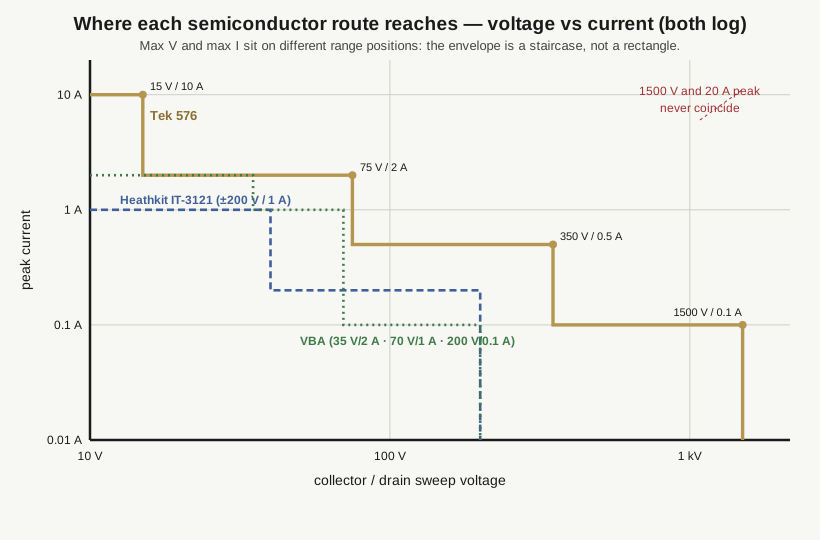
This dive is the connective tissue for the Curve Tracers category. It stays device-agnostic where the per-instrument dives go deep: Tektronix invented the category with the tube-oriented Type 570 (1955), then the Tektronix 575 (March 1957) established the semiconductor curve tracer; the 576/577 defined the classic transistor-lab instrument; Heathkit brought the IT-1121/IT-3121 to the hobby bench; and in the modern era Ronald Dekker's uTracer/eTracer and Paul Versteeg's VBA Curve Tracer put I-V tracing back within DIY reach. Readers should arrive here to learn what a curve tracer does and how to read one, then follow the cross-links into the specific instrument dives — the DIY tube tracers (eTracer, uTracer6, uTracer NXT) and the semiconductor tracers (Heathkit IT-3121, VBA Curve Tracer).