VBA Curve Tracer
Overview
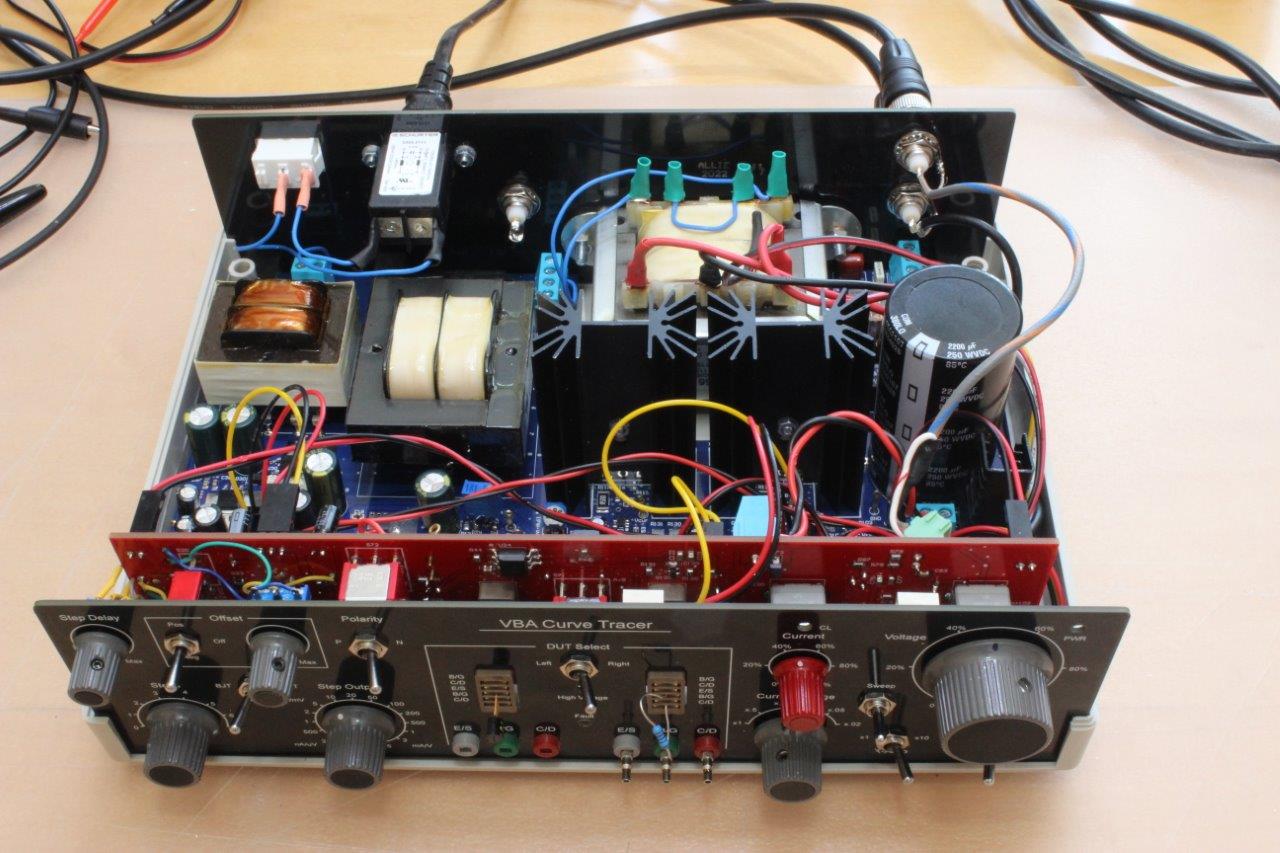
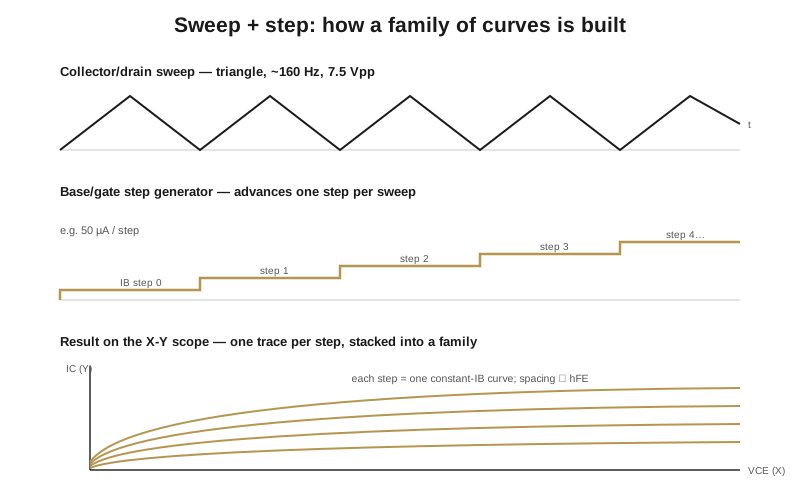
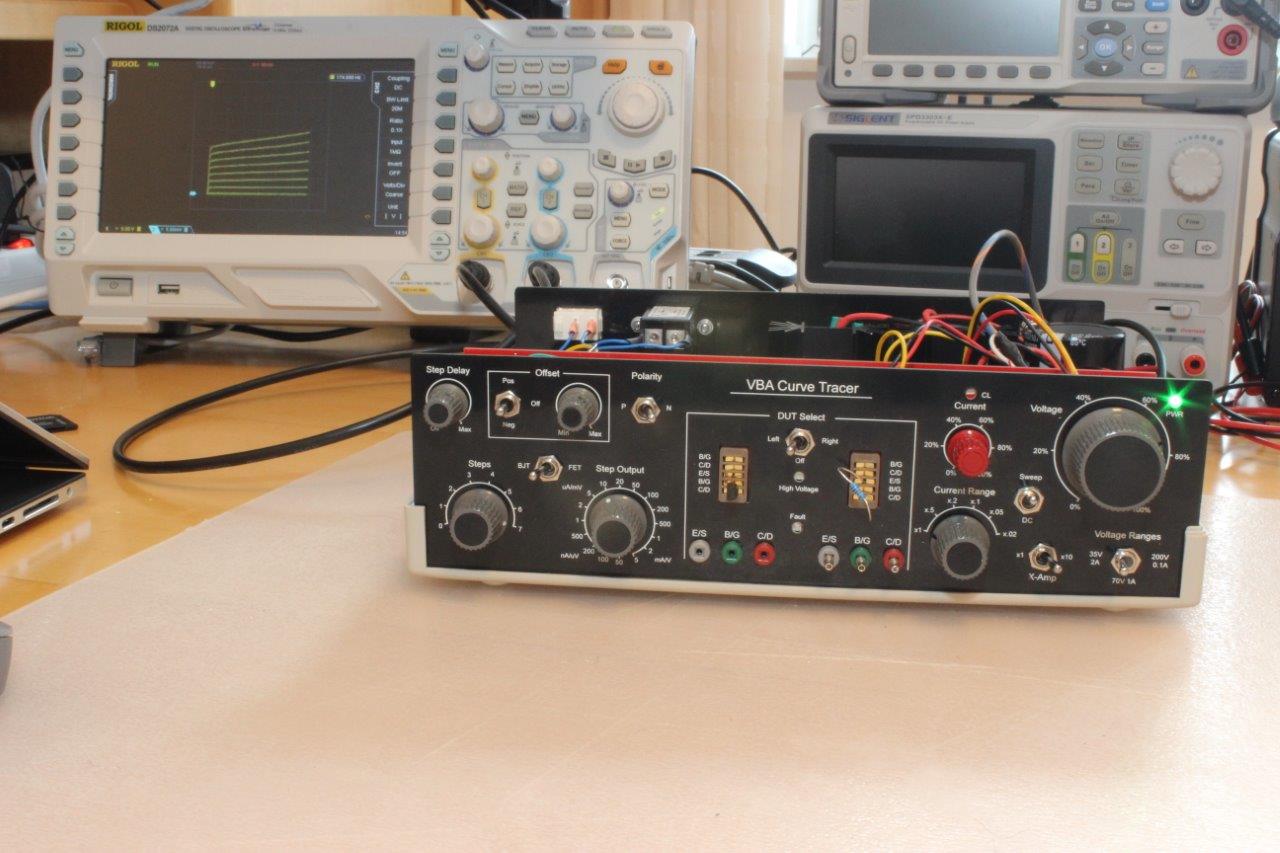
The VBA Curve Tracer is Paul Versteeg's open DIY semiconductor / component curve tracer, documented on his blog at paulvdiyblogs.net with hardware in the paulvee/VBA-Curve-Tracer GitHub repository. Where the uTracer/eTracer family traces vacuum tubes, the VBA traces solid-state components — transistors, diodes, LEDs, FETs, and other two- and three-terminal parts — sweeping voltage/current through the device and plotting its I-V characteristic on an oscilloscope in X-Y mode (the VBA is a fully analog instrument — the scope is the display; there is no microcontroller or host software). "VBA" is drawn from the surnames of its three designers — Paul Versteeg, Bud Bennett, and Mark Allie. This dive covers what the VBA is, its circuit design and main board, building it from the published design files, and using it to read component curves and match parts.
Context
The VBA is the modern DIY answer to the classic transistor curve tracer (the Tektronix 575/576/577 iron and the Heathkit IT-3121). It sits on the semiconductor side of this category, opposite the tube tracers (uTracer6, eTracer, uTracer NXT). Paul Versteeg publishes his projects as fully open designs (schematics, PCB, and board photos on GitHub — the VBA is all-analog, so there is no firmware or host code), which makes it a buildable, well-documented entry point for adding solid-state component tracing to the bench. See the category primer at Curve Tracers — Overview.