Electrostatic CRT Tester — Mark 2
Overview
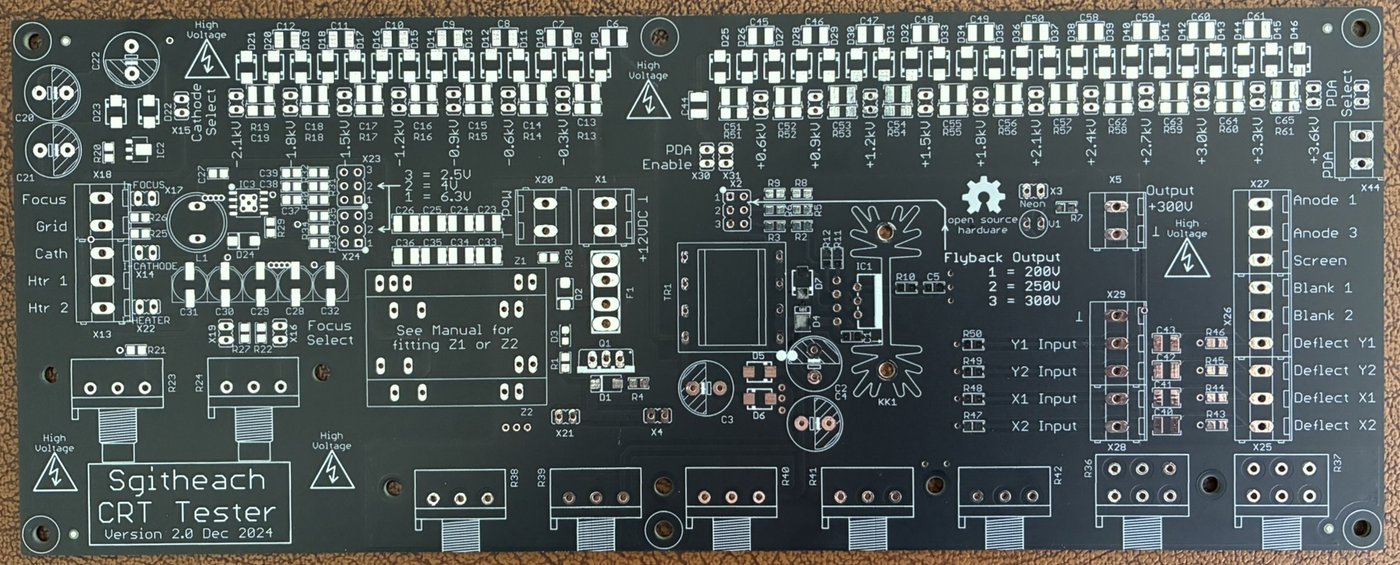
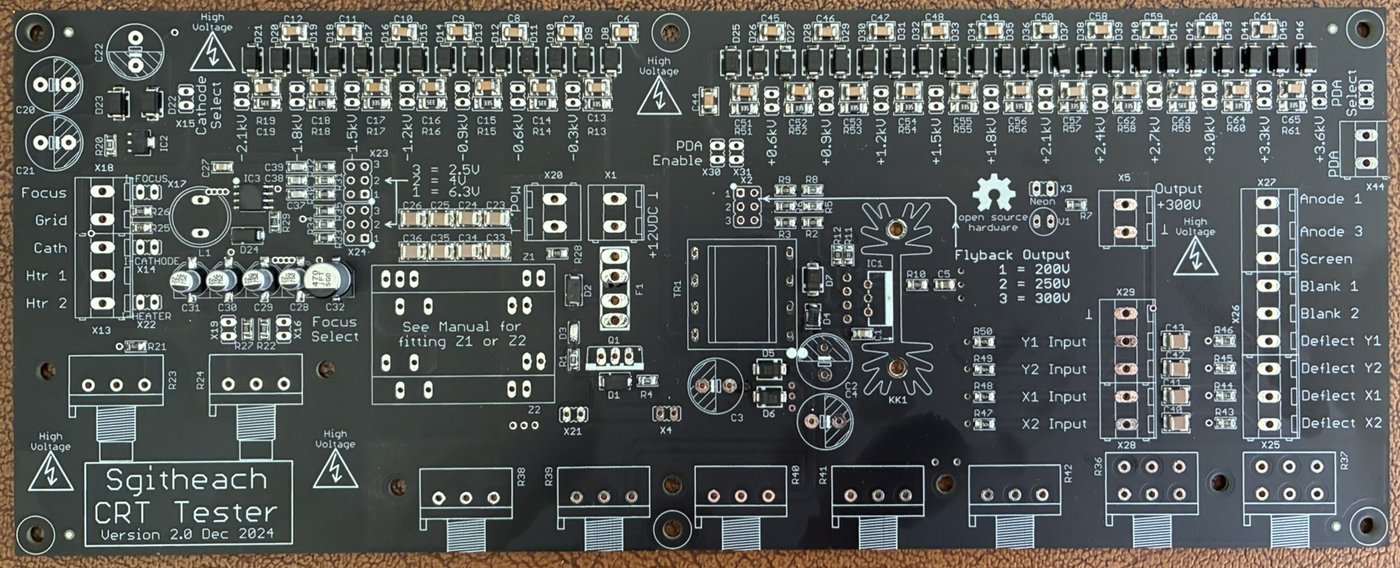
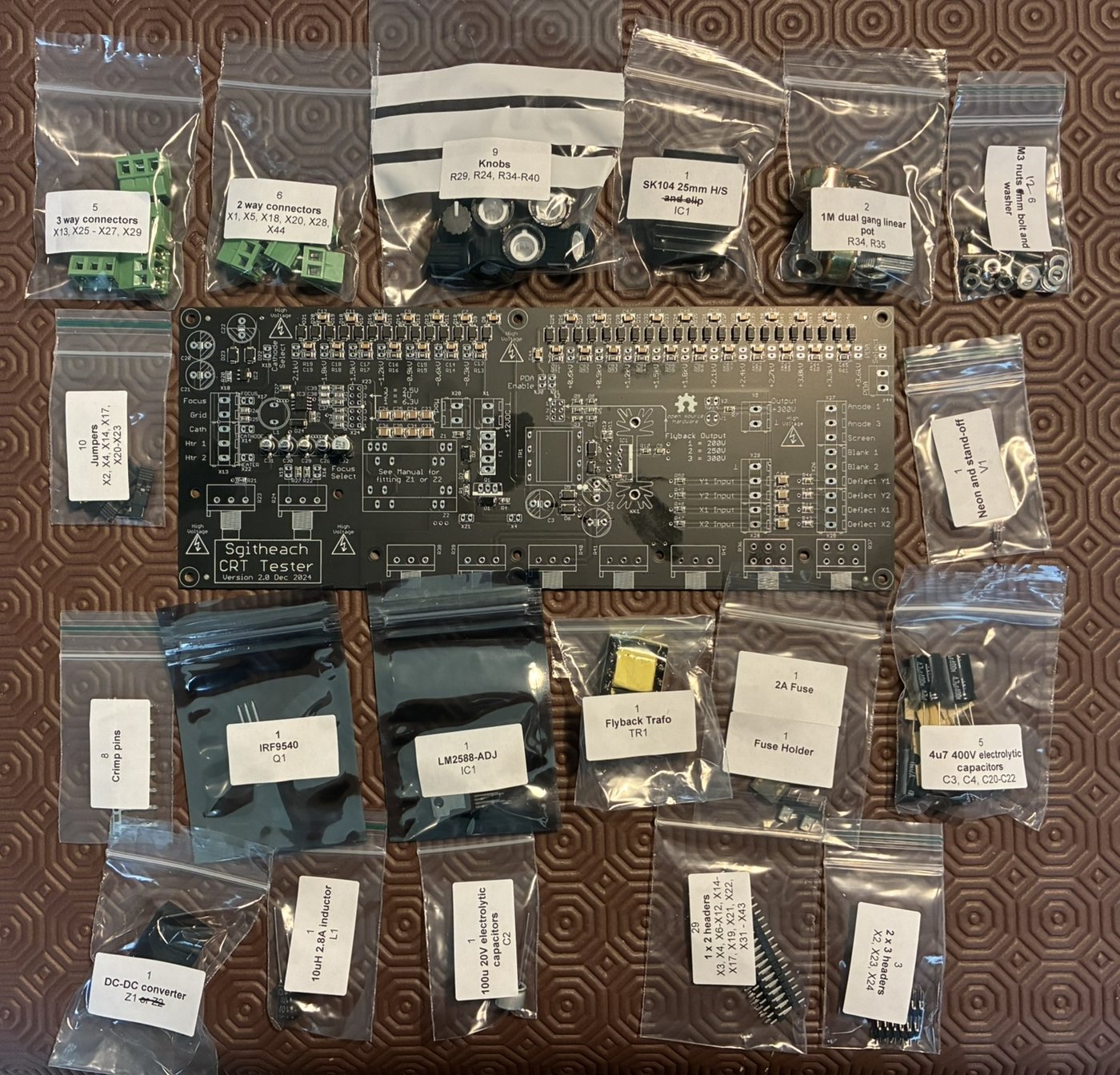
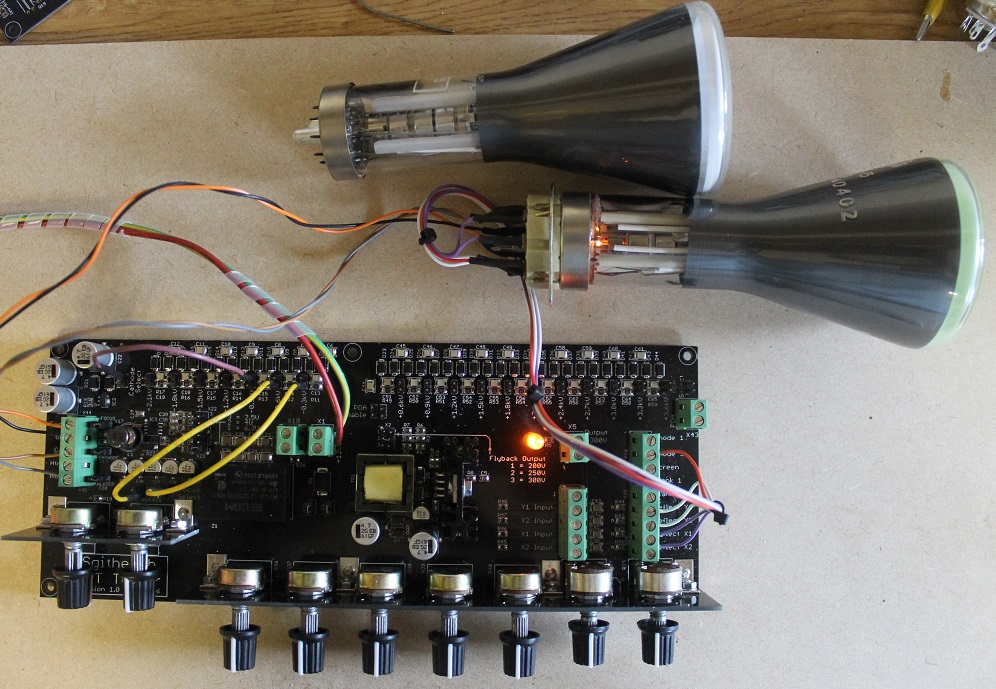
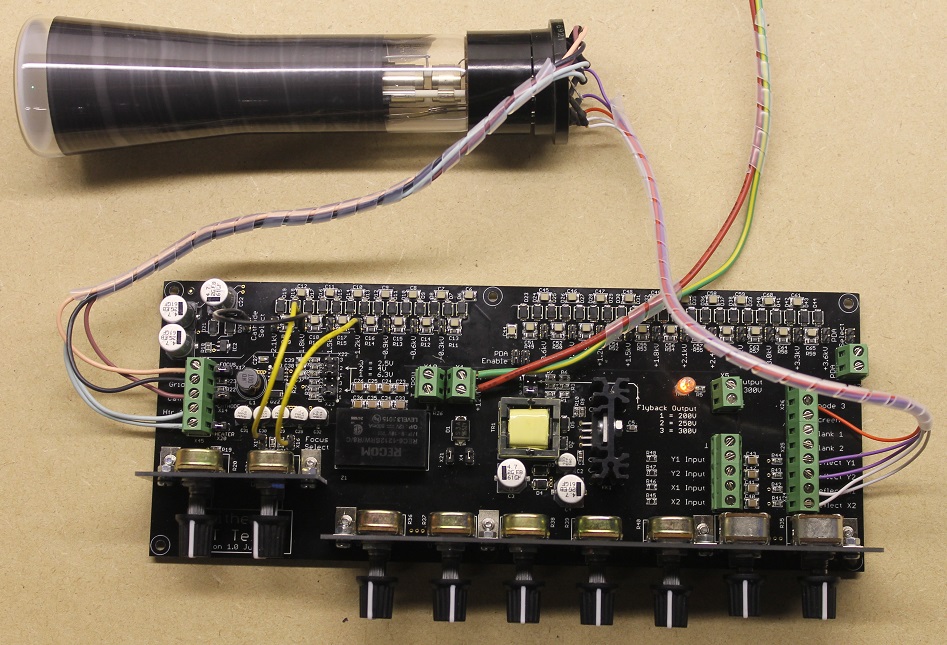
The Electrostatic CRT Tester — Mark 2 is a simple, manually-operated bench instrument for testing electrostatic-deflection, electrostatic-focus cathode ray tubes — the small round-face scope, radar, and indicator CRTs (DG7/32, 2BP1, 5SP7, CV-series, Russian ЛO-series, etc.) that have no proper datasheet or dedicated tester. It supplies every electrode a CRT needs from a single 12 V DC bench supply: a current-limited heater (~6 W), an adjustable control-grid bias (−5 V to −120 V), a wide-range focus supply, a flyback-derived acceleration anode up to ~+2.2 kV and a post-deflection-acceleration (PDA) supply up to ~+5.6 kV, and ±300 V push-pull deflection with AC-coupled X/Y and grid-modulation (Z) inputs — all set by hand with potentiometers and jumpers, "no micro-controller or PC in sight." It is an open design by the maker at sgitheach.org.uk, released under Creative Commons Attribution-ShareAlike 4.0, sold as bare-PCB, complete-electronics, and case kits. Beyond CRTs it also lights and characterises cold-cathode neon devices (dekatrons, Nixies, trigger tubes, bargraphs), magic-eye valves, the E1T beam-switching tube, NIMO tubes, and Geissler tubes.
Context
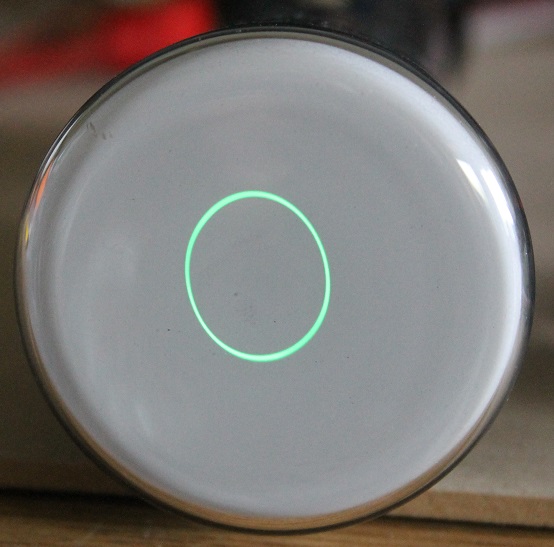
Electrostatic CRTs — the small round-face tubes used in oscilloscopes, radar indicators, and instrument displays before magnetic-deflection TV tubes took over — are notoriously hard to test: many have no surviving datasheet, they want a fistful of different voltages from a heater rail up to several kilovolts of EHT, and getting any of those wrong risks the phosphor or the gun. Jeff already runs the tube-era bench (the Heathkit TT-1 transconductance tester, the Supreme 385 emission tester, the eTracer/uTracer6 pulsed-HV curve tracers, and the Heathkit IP-32/SP-2717A HV supplies), but none of those brings a CRT to life. This tester fills that gap: a single-box, hand-adjusted supply that lights the heater, biases the gun, focuses and accelerates the beam, and deflects the spot — so an unknown CRT can be sorted good/weak/dead, its parameters measured, and its display driven for evaluation. It also ties into the Television project's mechanical/electrostatic-display work and the dekatron/Nixie material in Electronics — Neon Ring Counters.