Radio Shack 43-114 Telephone Tester
Overview
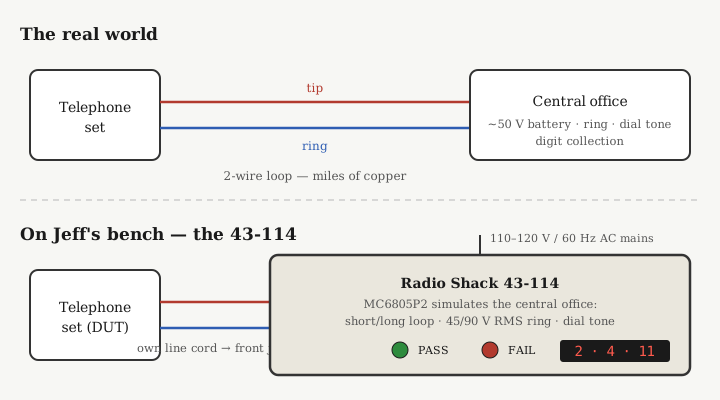
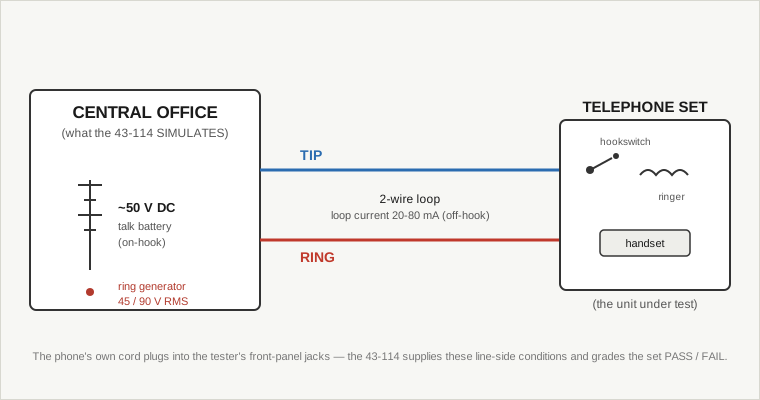
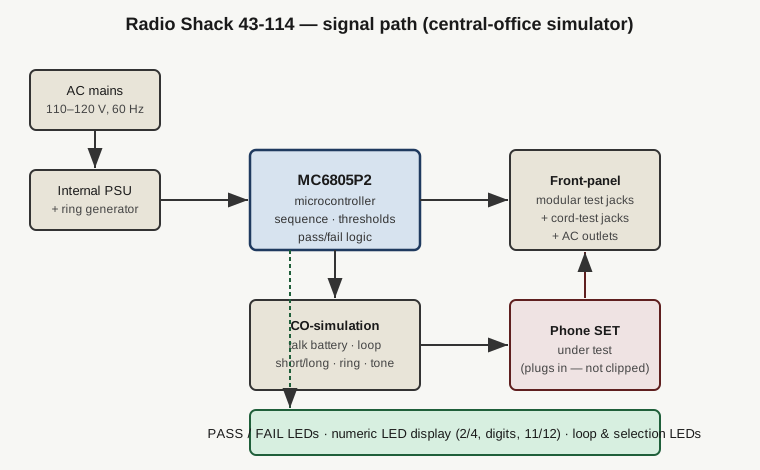
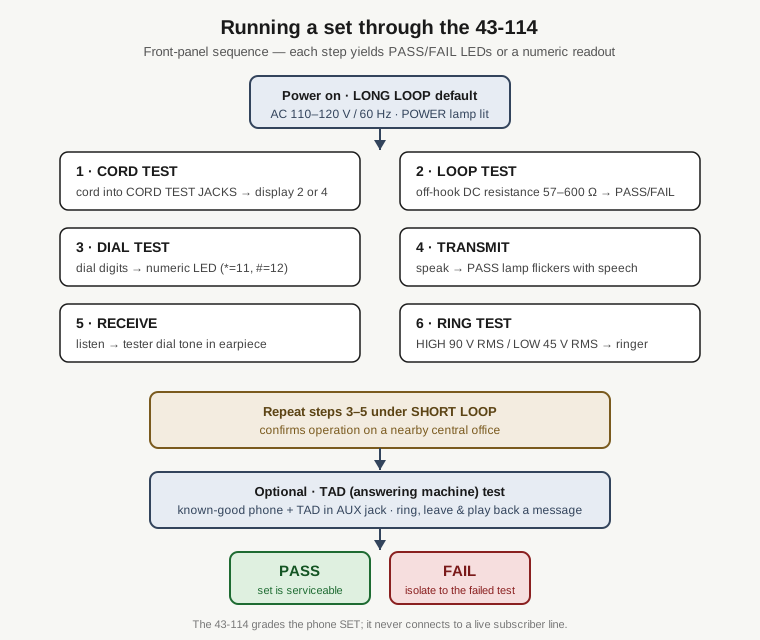
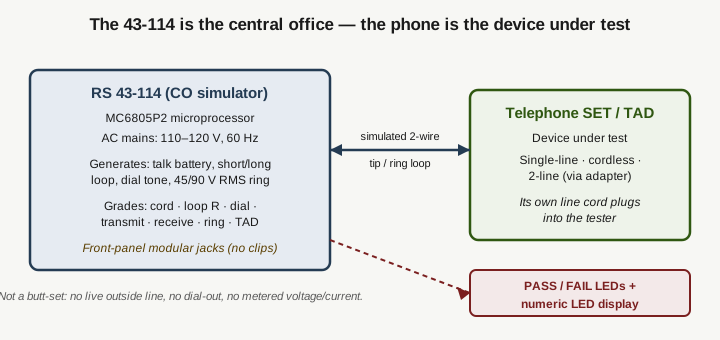
The Radio Shack "Telephone Tester" Cat. No. 43-114 (Tandy/Radio Shack, © 1985, made in USA) is a ~13 lb, *AC-mains-powered (117 V, 60 Hz), microprocessor-controlled (Motorola MC6805P2) benchtop console that simulates a central office and grades a telephone set (or answering machine) PASS/FAIL — a shop tool for servicing telephone instruments, not a line/loop tester you clip onto the outside plant. The phone under test plugs into front-panel modular jacks (the panel also carries AC convenience outlets). It runs ~7 functions: Cord test (2/4-conductor, opens/cross-pair shorts), Loop test (off-hook switch-hook DC resistance, 57–600 Ω), Dial test (numeric LED display of the dialed digit; =11, #=12; Touch-Tone + rotary/pulse), Transmit / Receive (speech + tester-generated dial tone), Short/Long Loop (near/far CO simulation), Ring test (Low 45 V RMS / High 90 V RMS), and a TAD (answering-machine) test. Readout is PASS/FAIL LEDs + a numeric LED display + selection/loop LEDs + a POWER lamp — no analog meter, no voltage/current readout. Handles single-line (2-line via adapter) and cordless; explicitly may not test key systems / PABX.
Context
POTS is increasingly rare — most US ILECs are retiring copper-pair voice and migrating subscribers to VoIP / fiber. This unit stays in the kit for: (a) the small but persistent set of POTS lines that still exist (alarm-system circuits, elevator phones, fax-only lines, rural lines); (b) reusing the unit as a general 2-wire / 4-wire continuity + polarity tester on intercoms, doorbells, and low-voltage signaling wiring; (c) bench reference for understanding telco-grade ringing / loop-current behavior. Not the primary tool for any new project — kept as a reference instrument.